Maasai Life and Learning: Culture, Identity and Tradition (1 Day)
For Elementary, Middle & High School Children
Overview
An experiential cultural program designed for elementary, middle, and high school students.
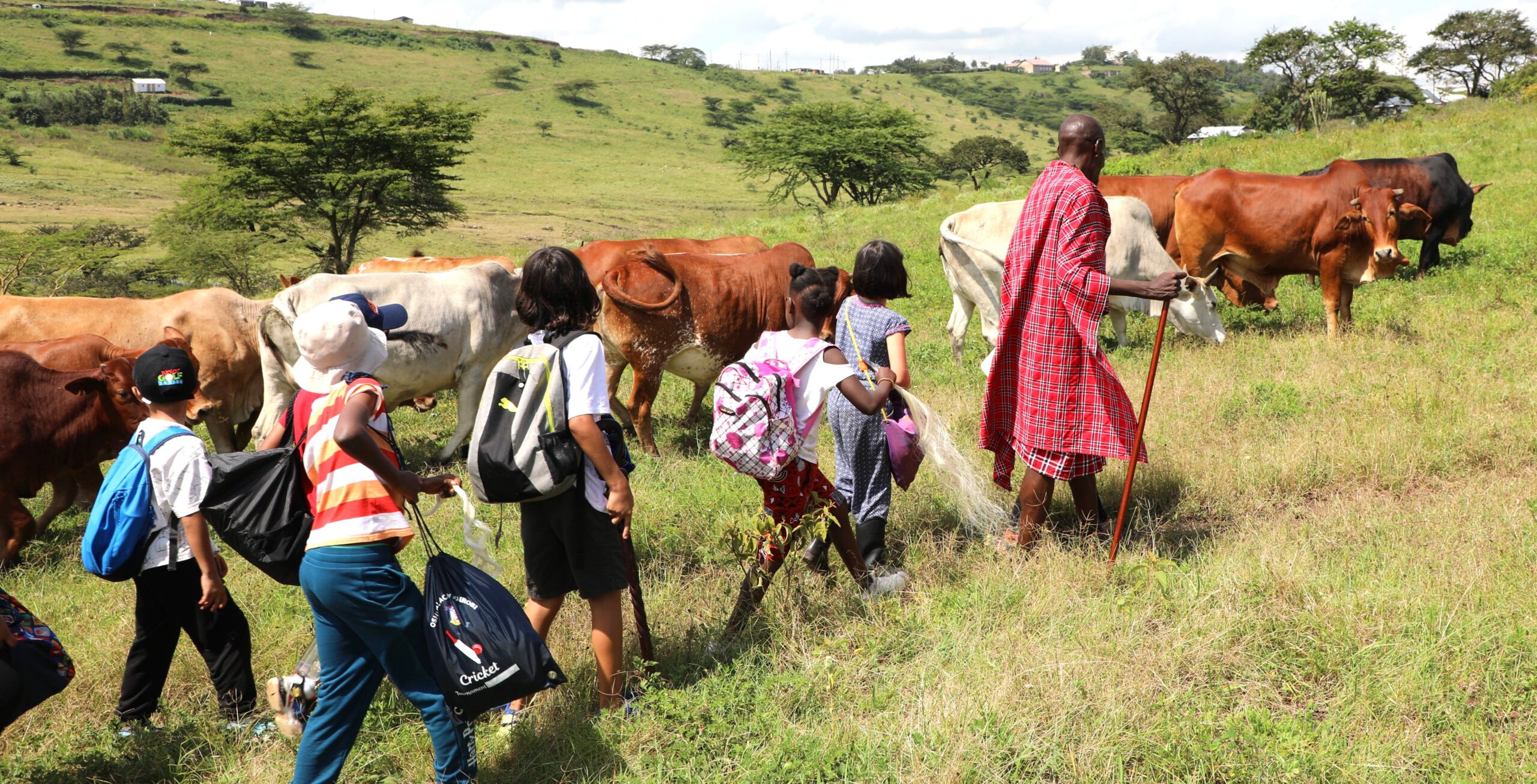
One Horizon Africa’s Maasai Culture program gives students a carefully guided opportunity to learn from Maasai elders, women, and young community members. The day is built around experiential learning: students ask questions, observe demonstrations, take part in selected activities, and reflect on how culture shapes identity, community roles, communication, and values.
The program can be adapted to school learning objectives and grade levels, making it appropriate for units in world cultures, anthropology, social studies, geography, comparative traditions, environmental knowledge, and global citizenship. Students are encouraged to approach the day with curiosity, respect, and a willingness to compare cultures without stereotyping.
For administrators, this program offers a strong curriculum rationale: it supports intercultural understanding, respectful inquiry, communication skills, and student reflection. It also provides teachers with rich material for pre-visit preparation and post-visit assessment.
Student Outcomes
- Develop intercultural understanding through guided learning with Maasai community members.
- Explore how culture shapes identity, family roles, communication, traditions, and values.
- Learn how traditional knowledge uses local materials and environmental resources responsibly.
- Practice respectful inquiry, observation, and comparison without stereotyping.
- Reflect on similarities, differences, assumptions, and connections to classroom learning.
Curriculum Connections
- World Cultures, Anthropology, and Social Studies: identity, traditions, family roles, and community structures.
- Geography and Environmental Knowledge: place, pastoral life, local materials, and adaptation to environment.
- Global Citizenship and Intercultural Communication: respectful inquiry, listening, comparison, and perspective-taking.
- Performing Arts and Cultural Expression: song, rhythm, dance, and the role of performance in community life.
Gallery
-

Learning About Building A Manyatta
-

Learning About Goats And Sheep
-

A Typical Maasai Village
-

Life In A Manyatta
-
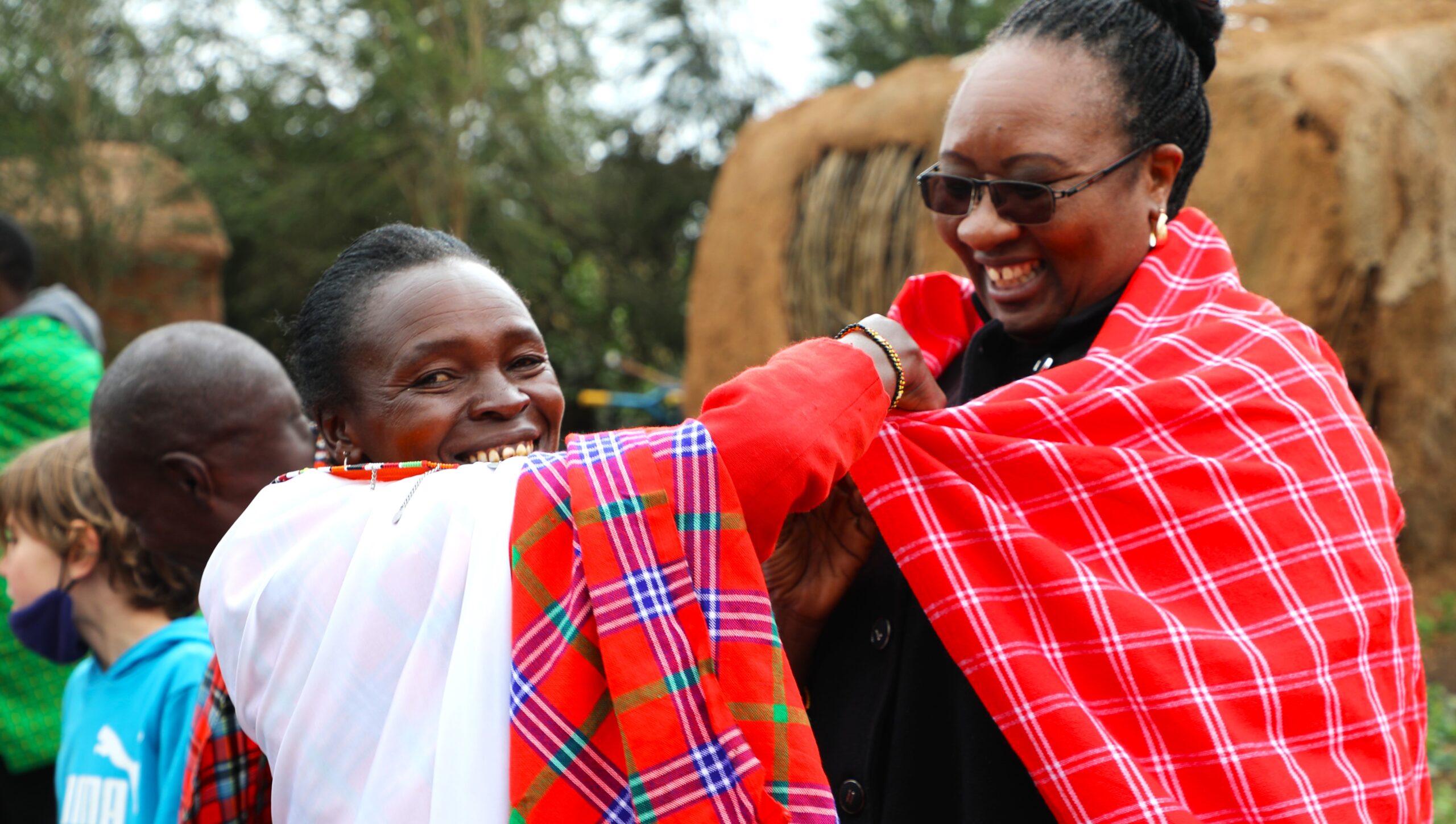
Being Adorned With A Shuka
-

Using What The Land Provides

Itinerary
An Introduction to Maasai Life – rituals and traditions
Each program is structured around the school’s learning objectives. Students begin inside a manyatta, a traditional Maasai home, where elders introduce key aspects of Maasai life, customs, family roles, seasonal patterns, and community responsibilities. Students are encouraged to ask thoughtful questions and to identify both differences and common human concerns.
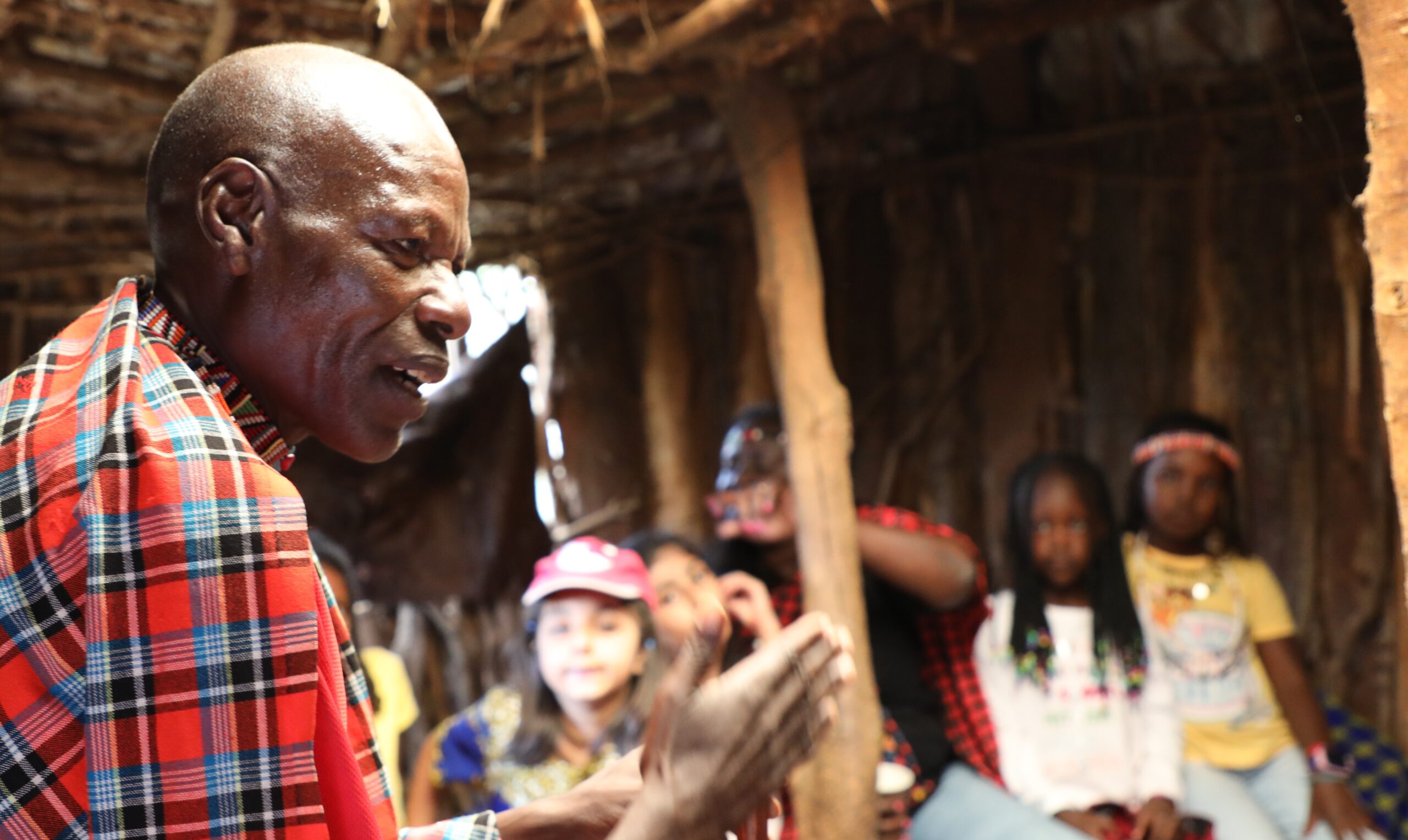 Learning From The Elders
Using what Nature Provides
Students learn how Maasai homes are built using locally available materials and traditional knowledge. They explore how plants, mud, and natural fibers are used responsibly, creating an opportunity to discuss sustainability, low-impact living, and the relationship between culture and environment.
 Using What Nature Provides
Building a Manyatta
Under the guidance of Maasai women, students may help apply mud to the frame of a manyatta. This hands-on activity is highly engaging and helps students understand how knowledge is passed through practice, cooperation, and community participation.
The activity creates strong opportunities for observation, questioning, and reflection. One Horizon staff can document the day with photographs and video for the school’s educational use, subject to agreed permissions and school policies.
 Building A Manyatta
It’s Time for Singing and Dancing Maasai Style
Students learn about the role of song, rhythm, and dance in Maasai community life. They may practice basic movements and melodies in a respectful, participatory setting that emphasizes cultural meaning rather than performance alone.
In this session the students will get to practice some of the basic dance moves and melodies of the Maasai. It’s a time of energy, laughter and great fun.
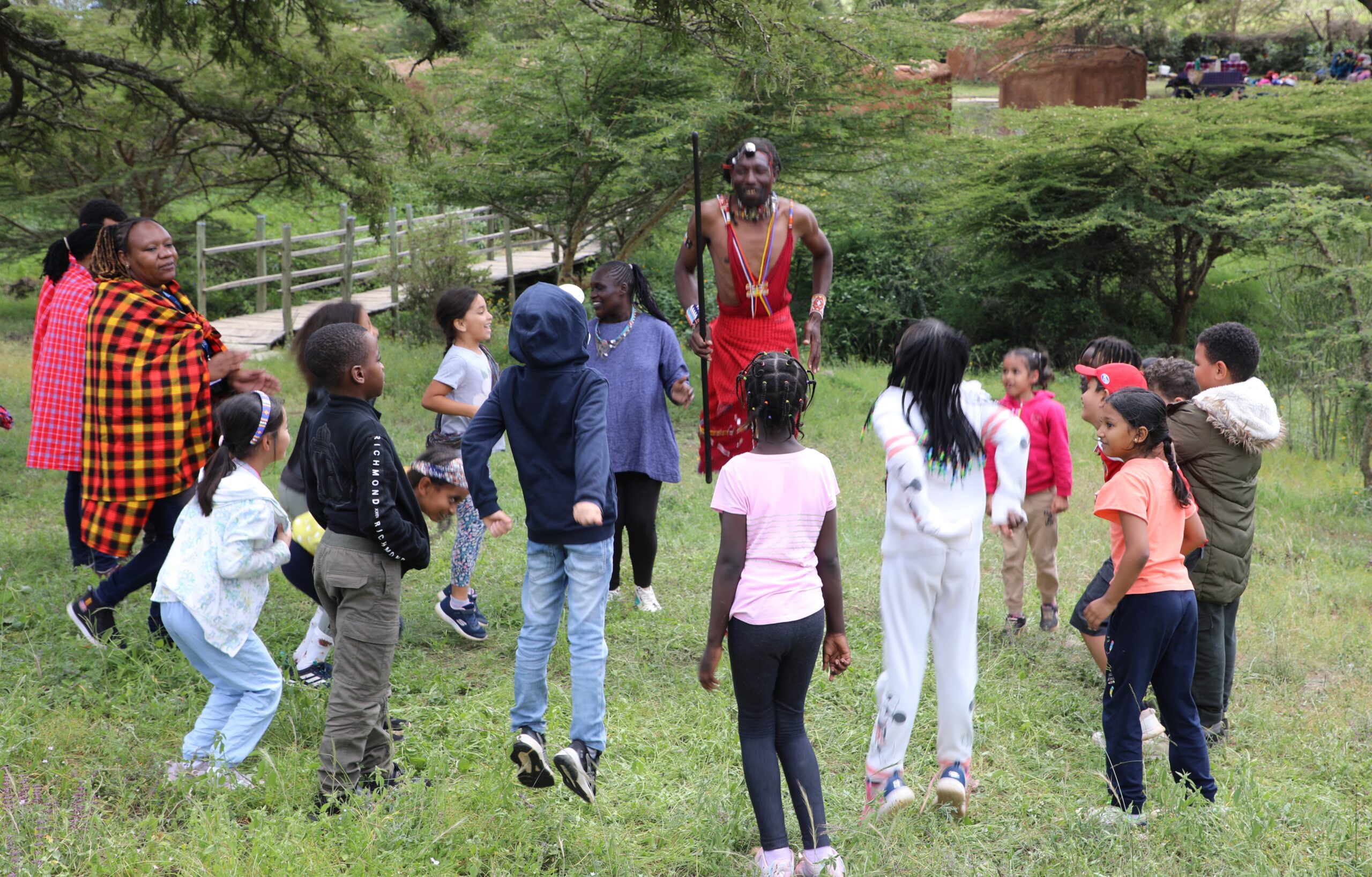 Learning Traditional Songs And Dance
Review and Wrap Up
The day concludes with a guided review of key learning. Students consider what surprised them, what challenged their assumptions, what similarities they noticed, and how the experience connects to classroom themes. This final reflection helps turn the visit into a meaningful curriculum-based learning experience rather than a stand-alone excursion.
 A Day Of Cultural Immersion
Inclusions
- One Horizon Africa staff collaborate with school staff to craft an experience that meets the schools’ objectives in relation to the content of the experience and the experiential nature of the program.
- Our villages are not open to the public and whilst they are part of the broader community they are restricted in access.
- We provide up to 50-60 images and uncut videos that the school can use in their learning activities.
- Our Maasai staff can be accessed to provide in school learning experiences as an adjunct to the day spent at the village.
- All the villages used in the program have modern, flush bathrooms available for the convenience of students and staff.
Video
FAQ's
Q1. Are students grouped according to age?
Answer: Yes. To ensure the program is age-appropriate, supportive and engaging, students participate in one of two groups:
- High school students aged 14 to 17 years
- College and university students aged 18 to 23 years
Q2. Do students aged 14 to 17 years need to be accompanied by a teacher, parent or guardian?
Answer: Yes. As part of our duty of care, students aged 14 to 17 years must be accompanied by an adult nominated by the school or institution. In most cases, this is a teacher or school-appointed staff member who acts as the lead contact and supports the management of the student group throughout the program.
Q3. Do college and university students aged 18 to 23 years need to be accompanied by a teacher, parent or guardian?
Answer: No. College and university students are not required to be accompanied by a teacher, parent or guardian. However, One Horizon requires a nominated point of contact for the group to support communication, coordination and liaison throughout the program.
Q4. Where do students and accompanying staff stay during their program?
Answer: Students and accompanying staff stay in 4- to 5-star international hotel accommodation for the duration of the program. The first two days of the program are conducted at the hotel, providing a comfortable and well-supported environment for orientation, learning and preparation. Accommodation is arranged on a twin-share basis.
Q5. How are students transported to community visits and program activities?
Answer: Students are transported in private, air-conditioned vehicles operated by One Horizon. The facilitators delivering the program also accompany students during daily activities, providing continuity, guidance and supervision throughout the experience.
Q6. Can parents contact their child during the program?
Answer: Parent communication is managed in accordance with the policies of the participating school or institution. One Horizon also provides 24-hour contact details, including mobile numbers and email addresses, so students can be reached if required. Internet connectivity is available at program venues and in the vehicles used to transport students and staff.
Q7. What meals are provided during the five-day program?
Answer: One Horizon caters for a wide range of dietary requirements, including vegetarian, vegan and familiar Western-style meal options. Meals are prepared with fresh, healthy ingredients and are provided through the hotel where students and staff are staying. Evening meals also include selected well-regarded Nairobi restaurants, giving students an additional opportunity to experience the city in a safe and structured way.
Q8. Is travel and health insurance required?
Answer: Yes. Appropriate travel and health insurance is required for student participation in the program. Schools, institutions, parents and guardians should ensure that each participant has suitable coverage before travel.
Q9. Does One Horizon have public liability and professional indemnity insurance?
Answer: Yes. One Horizon maintains insurance coverage that includes public liability and professional indemnity insurance. Copies of relevant policy documentation can be provided upon request.
Q10. What distinguishes One Horizon and the Changing This World experience?
Answer: One Horizon is accredited by the Kenyan Government to work directly with Kenyan communities. It operates independently and does not receive financial or other support from the Kenyan Government. Its overriding mission is to provide practical pathways that help people lift themselves out of poverty. This purpose-led approach gives students meaningful insight into community development, resilience and sustainable change. One Horizon’s mission and work are captured in the video ‘What We Do’.

 One Horizon Africa
 @onehorizonkenya
 onehorizonkenya